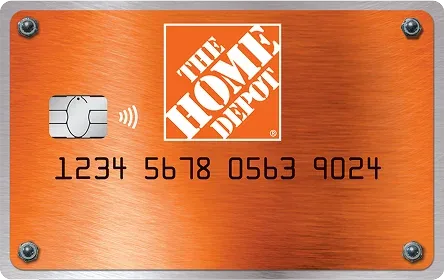
Home Depot Consumer Card: a $2,100 order needs $350 a month to avoid interest
A financing card, not a rewards card: 6-month deferred interest on $299 or more means a $2,100 order needs $350 a month, and $250 a month falls short.
The short answer
The Home Depot Consumer Credit Card is mainly a financing card with purchase-specific deals, not an everyday rewards card. It currently advertises 6-month financing on qualifying purchases of at least $299. The financing is deferred interest: there is no interest if you pay in full within the promotional period, but if you miss that full-payoff condition, interest can be charged from the purchase date.
In Julia's example, a $2,100 storage and shelving order clears in time with 6 payments of $350, or 5 payments of $420. At $250 a month, $600 would still be owed after 6 payments, and that leftover could trigger more than interest on just $600. Paying the same $2,100 on a 2% card without interest would earn $42.
The Studio gives it a Wallet Score of 57 out of 100 on its separate retail financing test. Its fit note reads, "An already planned Home Depot project fully paid before the individual promotion deadline." It suits a planned Home Depot project that you can pay off with room to spare before the deadline. It fits less well a buyer who could pay in full without borrowing, or one who wants everyday rewards.
What it costs
The card has no annual fee; the cost sits in the deferred-interest condition. The exact charge if you miss it depends on balances, dates, payments and the applicable rate, so Julia would ask the issuer to calculate it from her account details instead of guessing from what was left.
If she could pay without borrowing, she would ask what the store account adds. On a 2% card the $2,100 earns $42, which store financing gives up unless another qualifying store offer changes the comparison; she might accept that cost if the timing helped.
The price matters before the financing. If another retailer offered the same storage order for $2,000, including delivery and required accessories, she would start $100 lower before rewards. A quote that leaves out costs can make the monthly payment look more affordable, so include delivery, relevant installation, taxes, removal and optional protection.
What it earns
It earns nothing on an ongoing basis: this Consumer Credit Card is not an ordinary cash-back program. Home Depot's business accounts and separate project loans have different terms, so make sure you are reading the offer for the right product.
New-account discounts or longer special promotions might improve a particular deal. Check the purchase threshold, combination rules, expiration, account fees and APR in the actual disclosure. A limited first-purchase discount is not an ongoing rewards program, and the Studio's test leaves such discounts and special 24-month offers out.
The credits, used honestly
Julia describes two benefits: the financing offer and the returns policy. Home Depot advertises extended returns for eligible card purchases, with product-specific conditions. That is not a blanket warranty and does not mean every appliance can be returned a year later, so read the item's return and damage-reporting rules before accepting delivery.
If Julia returned part of an order, she would follow the credit through to the account and check what happened to the promotion and the scheduled payments. A receipt saying the return was accepted does not prove the issuer has finished adjusting the account.
The catch
Deferred interest is the catch. Julia plans the payoff amount separately from the minimum required on the account. She also tests a difficult month: if she usually paid $350 but managed only $250 once, she would need another $100 before the deadline, and the original schedule has no spare room. If she could not comfortably make up the difference, she would prefer a smaller project or a plan with more time.
Finishing early gives time to confirm that the promotional balance is actually 0. She would use the expiration date on the statement rather than assume six future statements line up with the deadline, and allow for posting dates and payment processing. If $250 were all she could afford, paying $1,500 would be progress but would not meet the full-payoff condition, so she would choose another plan.
She follows the individual promotional balance on each statement, not the large account total. A later purchase may have its own expiration date, and under the agreement payments can be divided among balances.
Approval does not ensure enough credit for the whole project. If only part fits, confirm that the promotion still qualifies, and work out how you will pay the rest before placing the order.
A true 0% introductory purchase APR does not carry the same condition reaching back to the original purchase; when it ends, the regular rate generally starts on the remaining balance going forward, though required payments and other terms still apply. A balance-transfer promotion is for existing debt and is not automatically an offer for new merchandise. Julia would not want the payoff to depend on a hoped-for bonus or future refinancing approval.
The Studio's limitation note says deferred interest can accrue from the purchase date on the promotional balance if it is not fully paid in time.
Who it fits
It fits an already planned Home Depot project that gets fully paid before the individual promotion deadline, like Julia's $2,100 storage order at $350 over 6 payments or $420 over 5. She would use the 6-month offer only with a payment she could reliably make, the right allocation, and a finish early enough to leave room for a problem.
It fits less well a household that can afford only $250 a month on that order, since that payment would not clear it in time. It also fits less well one that could pay in full: Julia would start with her existing cash-back card and any usable store discount. If she needed financing, she would choose it alongside a competitive project price and a realistic finish date.
The arithmetic
Julia's order is $2,100.
- Clearing in time: 6 payments of $350 or 5 payments of $420 both make $2,100, provided the payments go to the promotional balance.
- A $250 payment: 6 payments pay $1,500, so $600 is still owed when the deadline passes.
- A hard month: $250 instead of $350 leaves $100 to find before the deadline.
- A 2% card: $2,100 earns $42 without interest.
- A competing quote: $2,000 including delivery and required accessories starts $100 lower before rewards.
- The Studio's test: the same $1,200 purchase paid within 6 months works much better than a plan that runs past the deadline, because deferred interest makes the missed deadline costly.
Before you apply
Read the actual disclosure for the purchase threshold, the 6-month period, the deferred-interest wording, APR, account fees, combination rules and expiration, and ask the issuer to calculate the cost of a missed deadline from your account details. Check the return and damage-reporting rules for the item. Julia wants the full promotional balance cleared early enough to leave room for a problem.
The Studio checked these terms on October 6, 2026, so they may have moved since the video. The $2,100 order, the $350 payment and the $2,000 competing quote are Julia's assumptions to replace with your own.
Rewritten from Julia’s review script (1,211 words); every figure traces to the script or this card’s record. Terms checked Oct 6, 2026.